So far, you’ve been building in the safe, predictable world of software. But IoT doesn’t live there—it lives in messy wires, unstable power, and hardware that doesn’t always behave. Simulators won’t show you what happens when a connection slips or a sensor starts acting weird.
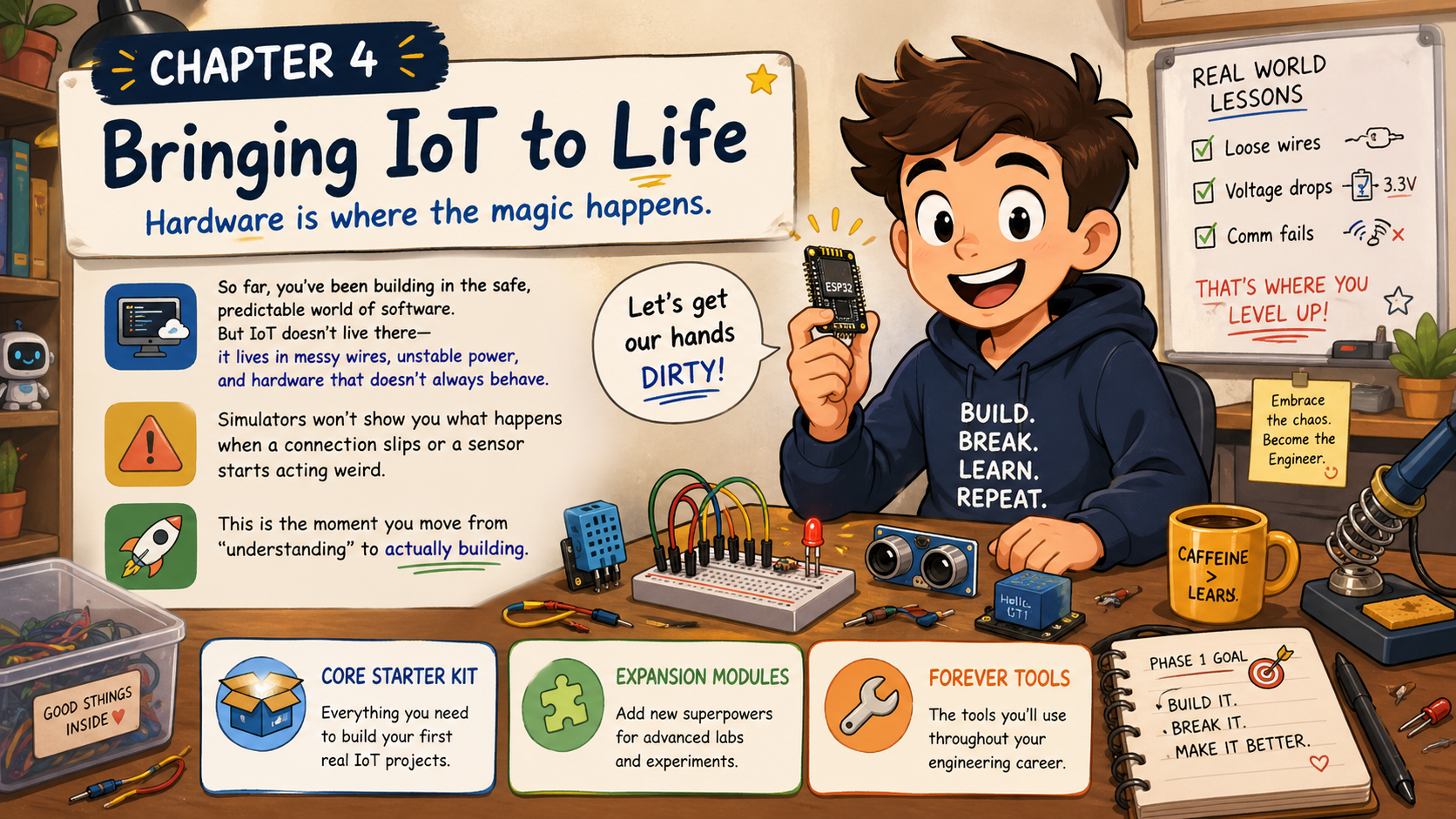
This is the moment you move from “understanding” to actually building.
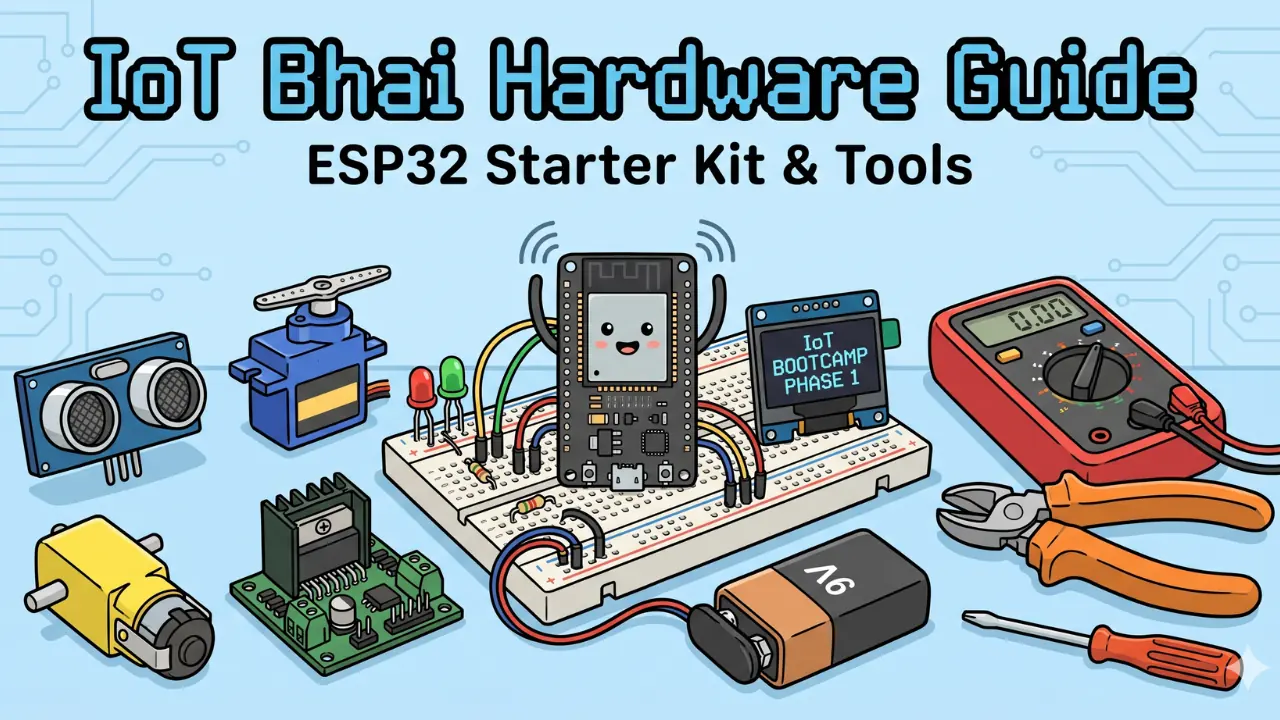
To make that jump easier, I’ve put together a clean, no-BS hardware list—split into your starter kit, expansion modules, and the tools you’ll keep using long after this bootcamp ends.
📦 1. The Core Starter Kit
If you are just starting, buying individual resistors, LEDs, and jumper wires is overwhelming and expensive. For the first 10 chapters of this bootcamp, we will rely on a bundled starter kit.
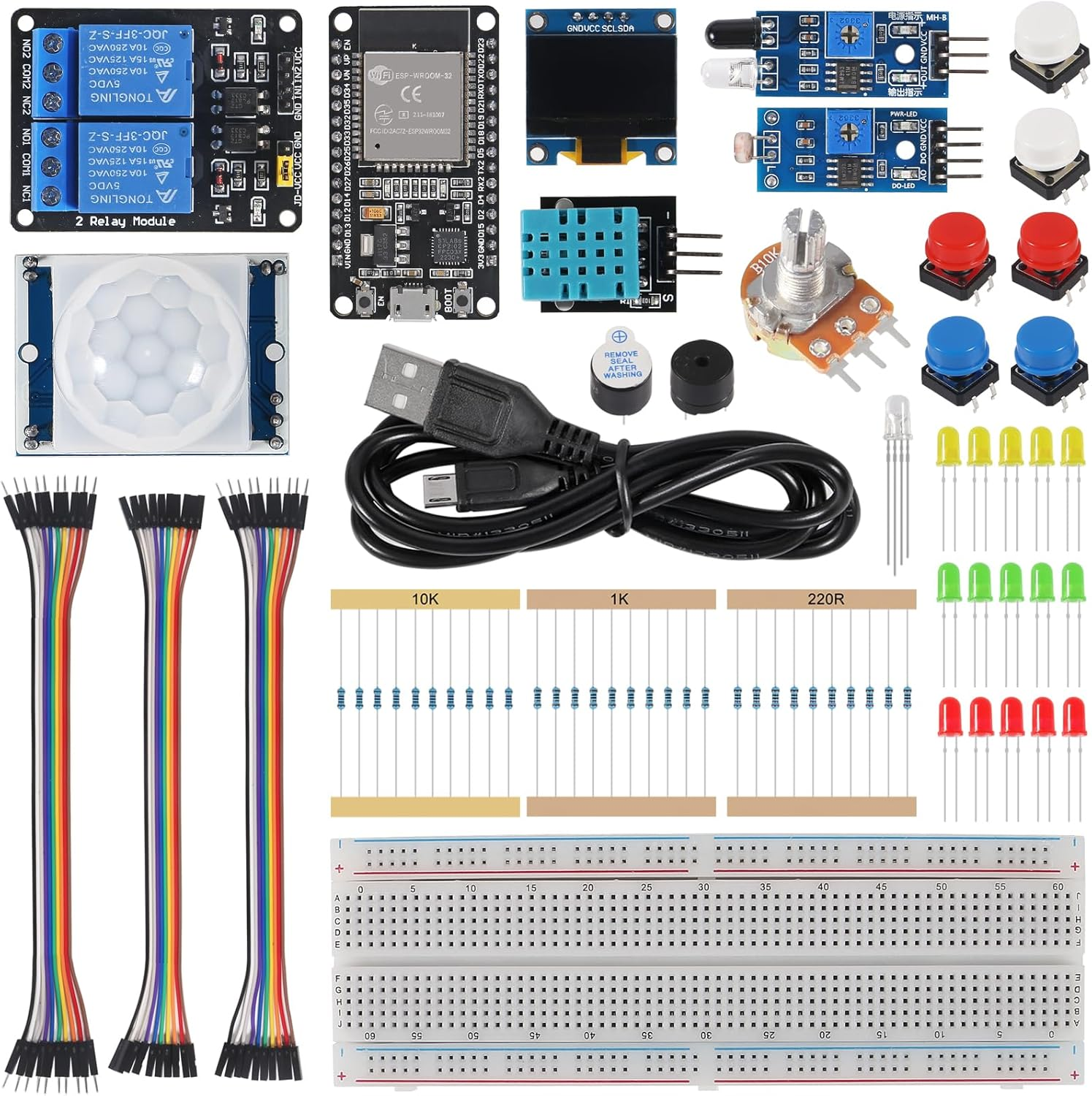
This kit contains the "brain" of our operations—the ESP32 Development Board—chosen for its powerful dual-core processor and built-in Wi-Fi/Bluetooth. It also includes our fundamental sensors (temperature, motion, light), output displays (OLED screen, buzzers, relays), and all the breadboards and wiring required to prototype without soldering.
- Get the ESP32 Basic Starter Kit: *
⚙️ 2. Phase 1 Expansion Modules
As we move into Chapters 11, 12, and 13, we push the ESP32 further. We will learn how to make physical objects move using PWM (Pulse Width Modulation), drive heavier loads safely, and explore advanced dual-protocol communication using both I2C and SPI.
To complete these later labs, you will need the following specific add-on modules:
Distance & Advanced Environment Sensors
- HC-SR04 Ultrasonic Sensor: Essential for teaching distance calculation using sound waves.
- BME280 Sensor (Temp/Humidity/Pressure): A massive upgrade over basic sensors, perfect for learning advanced I2C and SPI communication.
Actuators (Motors & Drivers)
- SG90 Micro Servo Motor: We will use this to master precise angular movement via potentiometer control.
- Small DC Motor & L298N Motor Driver: The ESP32 cannot power a standard motor directly without frying its pins. This driver acts as the heavy-lifting middleman.
- DC Motor: 🛒Amazon|AliExpress
- L298N Driver: 🛒Amazon|AliExpress
External Power
- 9V Battery & Connector: Required to power your motor driver and untether your projects from your computer.
- Battery: 🛒Amazon|AliExpress
- Connector: 🛒Amazon|AliExpress
🛠️ 3. The "Forever" Engineering Tools
These aren't just parts for a bootcamp; these are long-term investments. Whether you are building a simple smart home switch today or designing an industrial IoT architecture five years from now, these are the mandatory bench tools you will reach for every single time.
- Entry-Level Digital Multimeter: The most important tool on your desk. You will use this in Chapter 5 to learn Ohm's Law, verify the 3.3V logic rules, and troubleshoot short circuits.
- Precision Screwdriver Kit: Required for securing wires into your motor driver and relay terminals.
- Flush Wire Cutters: For trimming jumper wires and keeping your breadboard prototypes clean and professional.
See The Hardware In Action
If you want a closer look at what each of these components actually does before you buy, check out the Chapter 4 video guide below.
Join the discussion
Got a question, hit an error, or built this yourself? Share it below — sign in with GitHub to comment.